





Blog
Cozy Coloring Activities for a Calm and Focused Classroom

Discover how cozy coloring activities help teachers build a calm, focused classroom, with occupational therapy insights, setup tips, and printable PDF guidance.
Most classroom management guides focus on rules, routines, and consequences. What they rarely mention, but what occupational therapists have documented consistently, is that the physical act of coloring within defined boundaries produces a measurable shift in a child’s arousal state before any behavioral intervention is needed. That mechanism is the foundation of this guide. Here we cover what cozy coloring activities actually do to a child’s nervous system, how to move from a single session to an established classroom habit, how to set up the activity for groups of mixed ages, and how to answer the practical questions that come up once the routine is running. Whether the goal is a calmer morning transition, a quieter post-lunch reset, or a screen-free independent work period, the same principles apply.
The complete guide to understanding cozy colouring activities The process: from first exposure to established habit The practical guide to getting started with cozy colouring activities Common questions about how teachers use cozy colouring activities to create a calm and focused classroom environment answered directly
The complete guide to understanding cozy coloring activities
What occupational therapists understand about coloring that most classroom guides miss is that the activity works on the nervous system before it works on behavior, and that sequence matters enormously for how it should be used. When a child colors within defined lines, two things happen simultaneously. The visual cortex tracks the boundary in real time, and the motor cortex adjusts grip pressure and stroke direction to stay within it. That dual-system coordination requires a level of focused attention that is incompatible with the diffuse, high-arousal state that produces disruptive classroom behavior. The child cannot easily color and escalate at the same time because the same cognitive resources are required for both.
This is the mechanism that most classroom management literature skips. The benefit is not simply that coloring is quiet. It is that the specific sensory-motor loop involved in controlled coloring competes directly with the arousal patterns that precede most behavioral incidents. Occupational therapists who work with children in sensory processing contexts have used this principle for years in the form of “heavy work” and “fine motor regulation” activities. Coloring, when structured correctly, falls into the same functional category.
The benefits of how can teachers use cozy coloring activities to create a calm and focused classroom environment? for children extend well beyond the session itself. Research in occupational development links regular fine motor coloring practice to improvements in grip endurance, pencil pressure control, and the ability to sustain single-task focus. For children aged three to seven who are still building these foundational skills, the classroom coloring session is not a break from learning. It is a direct contributor to the physical readiness that written work requires.
Why illustration design affects regulatory outcomes
Not every coloring page produces the same regulatory effect. Pages with thick outlines and large enclosed areas create a predictable, achievable task that the nervous system can settle into. Pages with fine linework and many small enclosed spaces create a higher cognitive load, which can tip a dysregulated child further toward frustration rather than calm. For classroom use, particularly with the how can teachers use cozy coloring activities to create a calm and focused classroom environment? for toddlers age group, selecting pages with broad shapes and minimal interior detail is not a simplification. It is a deliberate neurological decision.
How regularity changes the effect
A single coloring session produces a temporary shift in arousal state. A regular coloring routine produces a conditioned response. When children encounter the same setup, the same materials, and the same signal repeatedly, the nervous system begins to anticipate the regulated state before the activity even begins. This is the same principle behind any effective classroom transition ritual. The coloring activity earns its regulatory power through repetition, not through novelty.
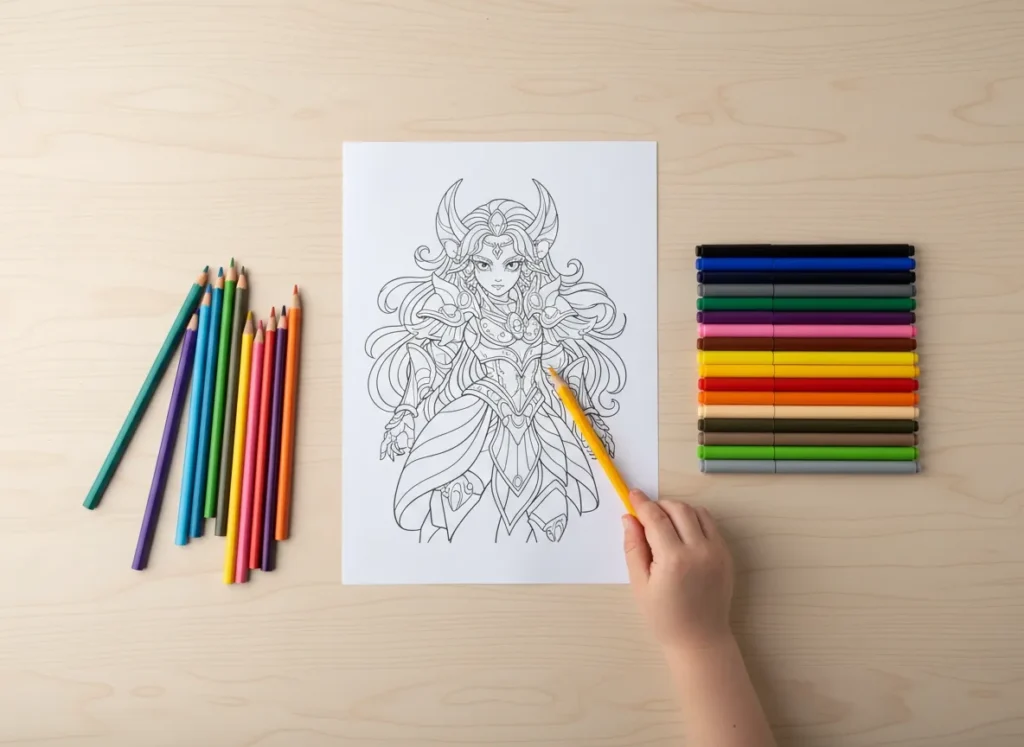
The process: from first exposure to established cozy coloring activities habit
The difference between a coloring session that works once and a coloring routine that works every day is almost entirely a function of setup consistency, not child motivation. I have seen well-intentioned coloring activities fail in classroom settings because the materials changed each time, the timing was unpredictable, or the page selection was left to chance. Each of those variables undermines the conditioned response that makes the routine valuable.
The first session should be treated as an orientation rather than a full activity. The goal is not a finished page. The goal is familiarity with the setup: where materials are located, how pages are distributed, what the expected behavior looks like, and how the session ends. Children aged three to seven need this scaffolding explicitly because they cannot infer procedural expectations from general instructions. A five-minute walkthrough of the setup on day one prevents the confusion that disrupts day two.
From the second session onward, the routine should be identical in its physical setup. Same table positions, same material placement, same page complexity level for the same children. The cozy coloring activities guide principle I return to most often in early implementation is this: sameness is the mechanism, not the limitation. The nervous system responds to predictability by downregulating arousal. Every deviation from the established setup delays that response.
Managing the transition into the activity
The transition into a coloring session is itself a regulatory moment. Children who arrive at the table in a high-arousal state, after recess, a conflict, or a loud transition, need a brief physical settling before fine motor work is possible. A simple instruction to place both hands flat on the table for ten seconds before picking up a pencil uses proprioceptive input to begin the downregulation process. Occupational therapists call this a “grounding” input. It costs nothing and takes seconds.
Knowing when the routine is established
A coloring routine is established when children begin the activity without prompting and maintain focus for the full intended duration without behavioral redirection. For most classroom groups, this takes between five and ten consistent sessions. I have found that groups with higher baseline arousal levels, typically post-lunch sessions or end-of-week afternoons, take closer to ten sessions to show consistent self-regulation. Patience in the establishment phase is what makes the routine function independently later.
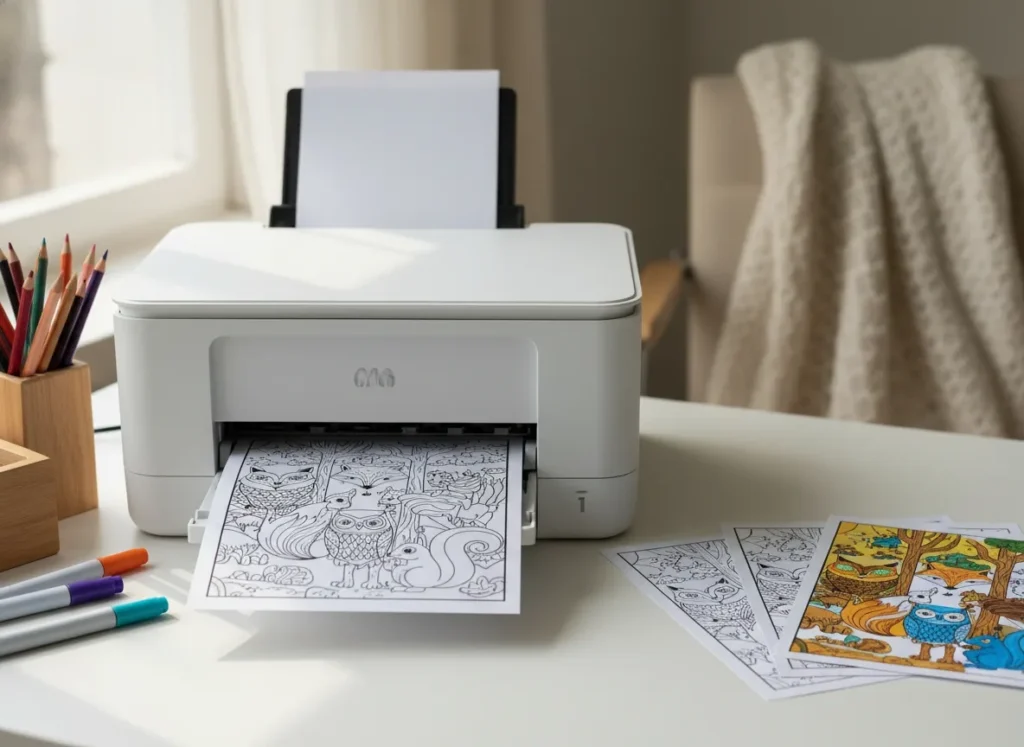
The practical guide to getting started with cozy coloring activities
The logistical questions that determine whether a classroom coloring routine succeeds or fails are almost never about which pages to use; they are about how materials are organized, how many children can participate simultaneously, and how the session fits into the existing schedule. I want to address each of those directly.
For the best how can teachers use cozy coloring activities to create a calm and focused classroom environment? for kids ages 3 to 10, the materials needed per child are minimal: one printed page at the appropriate complexity level, a set of four to six wide-tipped crayons for children under six or a set of colored pencils for children six and above, and a flat well-lit surface. A group of twenty-five children can run this activity simultaneously with no additional supervision beyond normal classroom monitoring, because the task is self-contained and self-paced by design.
Paper weight matters more than most teachers expect. Standard 80gsm printer paper is too thin for crayon or pencil layering and produces a finished page that feels insubstantial. Paper at 90gsm to 120gsm accepts multiple color layers without dimpling, produces a result the child perceives as worth completing, and holds up to the handling a young child gives a finished piece. That last point matters for motivation: a page that survives being carried home is more likely to be displayed, and display reinforces the child’s investment in returning to the activity.
Using a PDF series for scalable classroom implementation
A curated PDF series solves the most common logistical problem in classroom coloring implementation, which is selecting appropriate pages quickly for mixed-age or mixed-skill groups. A thematic series with built-in complexity progression allows a teacher to print simpler pages for younger children and more detailed pages for older children from the same visual collection. The shared theme creates a sense of collective activity across the group even when individual pages differ, which matters for classroom cohesion.
The how can teachers use cozy coloring activities to create a calm and focused classroom environment? ideas for beginners I recommend most consistently center on starting with a single series rather than assembling random printables from multiple sources. Visual cohesion across sessions builds the child’s sense of participation in something continuous, which increases voluntary engagement over time.
Timing the session within the school day
The two highest-value placement windows for a classroom coloring session are the first ten to fifteen minutes of the morning and the first ten minutes after lunch. Both are transitions from high-stimulation environments, outdoor play, home arrival, and the cafeteria, into a context that requires focused attention. Placing the coloring activity at these transition points uses the regulatory mechanism precisely where the classroom needs it most. I have found that morning sessions produce the most consistent results because the nervous system has not yet accumulated the arousal load that builds across the school day.

Common questions about cozy coloring activities in the classroom answered directly
The questions teachers and parents ask most consistently about classroom coloring routines reveal a shared concern: will this actually work, and how will I know? The answers below are grounded in both occupational therapy research and the practical realities of running the activity with groups of children.
The cozy coloring activities tips for parents and educators who ask about effectiveness almost always want a mechanism, not just a reassurance. The mechanism is dual-system sensory-motor coordination, as described earlier in this guide. When that coordination is understood, the conditions that make the activity work become self-evident: matched page complexity, consistent setup, appropriate tools, and sufficient session regularity to produce a conditioned response.
How many children can participate in a cozy coloring session at once?
A full classroom of twenty-five to thirty children can participate simultaneously, provided each child has a printed page, an appropriate set of tools, and a defined workspace. The activity requires no verbal interaction between participants, which means it scales without additional supervision demands. The only logistical constraint is printing volume: for a class of thirty children meeting five days per week, preparing a week of pages in advance on Monday morning prevents daily interruptions. A PDF series makes that batch printing straightforward because all pages are immediately accessible in a single file.
What is the difference between a coloring page that calms and one that overwhelms?
The distinction comes down to cognitive load. A page with thick outlines, large enclosed areas, and a single recognizable subject requires a manageable level of visual tracking and motor control. A page with fine linework, many small enclosed spaces, and complex interior pattern requires significantly more of both. For children in a dysregulated state, the higher cognitive load page tips the nervous system further toward overwhelm rather than regulation. For classroom regulatory use, page simplicity is a feature, not a concession to low ability.
At what age can children benefit from a structured coloring routine?
Children as young as three can benefit from structured coloring sessions when the pages are appropriately matched to their motor development. At this age, the relevant page characteristics are very thick outlines, large single-color areas, and a familiar subject like an animal or simple object. The regulatory benefit at this age comes primarily from the physical act of holding and pressing the crayon, which provides proprioceptive input to the hand and arm, rather than from the visual tracking component that becomes more significant in older children. By age five, both components are active, and the full regulatory mechanism is accessible.
How long should a classroom coloring session last for children aged three to seven?
Fifteen to twenty minutes is the productive range for this age group. Below fifteen minutes, the session ends before the regulatory effect has fully developed, because the nervous system needs several minutes of sustained fine motor engagement before it begins to shift arousal state. Above twenty-five minutes, cognitive fatigue begins to affect the quality of the work and the child’s willingness to return to the activity the next day. Ending while the child is still engaged, rather than waiting until attention drifts, is the single most effective practice for maintaining the routine long-term.
Does the coloring session need to be silent to produce a regulatory effect?
No, but ambient noise level matters. Quiet conversation between children does not disrupt the dual-system coordination that produces the regulatory benefit. Loud, competitive, or conflict-driven interaction does, because it recruits the same arousal pathways the activity is designed to downregulate. A practical classroom norm for the session is quiet working voices, which allows natural social interaction without generating the noise level that undermines the activity’s function. Most children adopt this norm naturally within the first few sessions because the activity itself creates a quieter mode of engagement.
Can the same pages be used across multiple sessions, or does novelty matter?
Novelty matters less than most teachers expect. A child who colors the same page twice often produces a visibly different result on the second attempt, because fine motor learning consolidates during the rest between sessions and the hand is more capable than it was before. For regulatory purposes, familiar pages can be preferable to novel ones because familiarity reduces the decision-making load at the start of the session, which allows the regulatory effect to begin sooner. A PDF series that a child has worked through before functions as a comfort object in the best procedural sense: it is known, predictable, and therefore settling.
How do we handle children who resist the coloring activity initially?
Resistance in the first two to three sessions is normal and not a reliable indicator of how the child will respond once the routine is established. The most common cause of initial resistance is unfamiliarity with the expectation rather than genuine dislike of the activity. A child who sees peers engaging with the pages without comment or pressure will almost always begin participating within three sessions. Forcing participation or adding verbal encouragement typically prolongs the resistance because it increases the social stakes of the activity. Placing appropriate materials in front of the child and continuing the session without comment is the approach that produces the fastest voluntary engagement.
Cozy coloring activities work in classroom settings because they engage a specific sensory-motor loop that directly competes with the arousal patterns underlying disruptive behavior. The effect is neurological before it is behavioral. Page complexity, material consistency, session timing, and routine regularity are the variables that determine whether a single session becomes a sustainable classroom tool. For children aged three to seven, the regulatory benefit is highest when the pages are simple, the tools are matched to current grip development, and the setup is identical from one session to the next.
Most classroom management strategies ask children to regulate behavior from the outside in, through rules and consequences. A well-structured coloring routine works from the inside out, by giving the nervous system a specific, achievable task that naturally produces a calmer state. That is the insight occupational therapists have been applying for decades in clinical settings. It transfers directly to the classroom, and the barrier to implementation is lower than most teachers expect. The materials are ordinary, the setup is simple, and the effect is consistent when the conditions are right.
Every session run without appropriately structured pages is a session that relies on the child’s existing regulation capacity rather than building it. The Cozy Family Coloring Book PDF series contains pages designed for exactly the complexity progression this guide describes, from broad-outline pages suited to toddlers through to detailed illustrations for older children, and the collection is available to download now. Waiting means the next session starts without the foundation that makes the routine work.
