



Blog
The Real Benefits of Cozy Friends Coloring Book for Children Ages 3 to 10
Discover how the cozy friends coloring book builds real skills in children ages 3 to 10, from fine motor control to focus, one page at a time.
A five-year-old sits at the kitchen table, tongue pressed to her upper lip, slowly dragging a crayon along the curve of a bear’s ear. Her parent sees a quiet afternoon. Her occupational therapist sees something else entirely: a child practicing the tripod grip, regulating hand pressure, and training her eyes to track a boundary. What parents call “just coloring” is what specialists call structured fine motor training. This article walks through exactly what coloring does to a developing brain and hand, why some children respond to it faster than others, how to set it up at home without overthinking it, and what separates a coloring book that gets used from one that sits untouched on a shelf.
What parents consistently notice after three weeks of daily coloring
Parents who commit to daily coloring activities for kids for three weeks often report a shift that surprises them: their child starts holding crayons differently without being asked.
This happens because repetition builds neural pathways. The hand learns the motion not through instruction but through practice accumulated across multiple short sessions. When a child colors the same type of rounded shape again and again, say a rabbit’s round cheek or a cat’s curled tail, the brain maps the motor sequence required. By day fifteen to twenty-one, that mapping begins to feel automatic. I have seen this pattern described consistently by parents in structured early childhood programs, and it aligns with what we know about procedural memory formation in children under ten.
The benefits of coloring for children extend beyond the hand, though. Sustained attention is also trained during these sessions. Staying inside a line requires a child to monitor two things simultaneously: the tool and the boundary. That divided attention is a genuine cognitive workout. A seven-year-old who colors for twenty minutes a day is practicing a form of focus that transfers to reading and writing tasks. The improvement is not immediate, but it is measurable after consistent exposure. Three weeks is the minimum threshold most parents need to see it, and it is why consistency matters more than duration.
The connection between coloring and pencil grip in the cozy friends coloring book approach to early childhood
The way a child holds a crayon at age four directly predicts the ease with which they will hold a pencil at age six, and coloring is one of the most natural ways to shape that grip before formal writing begins.
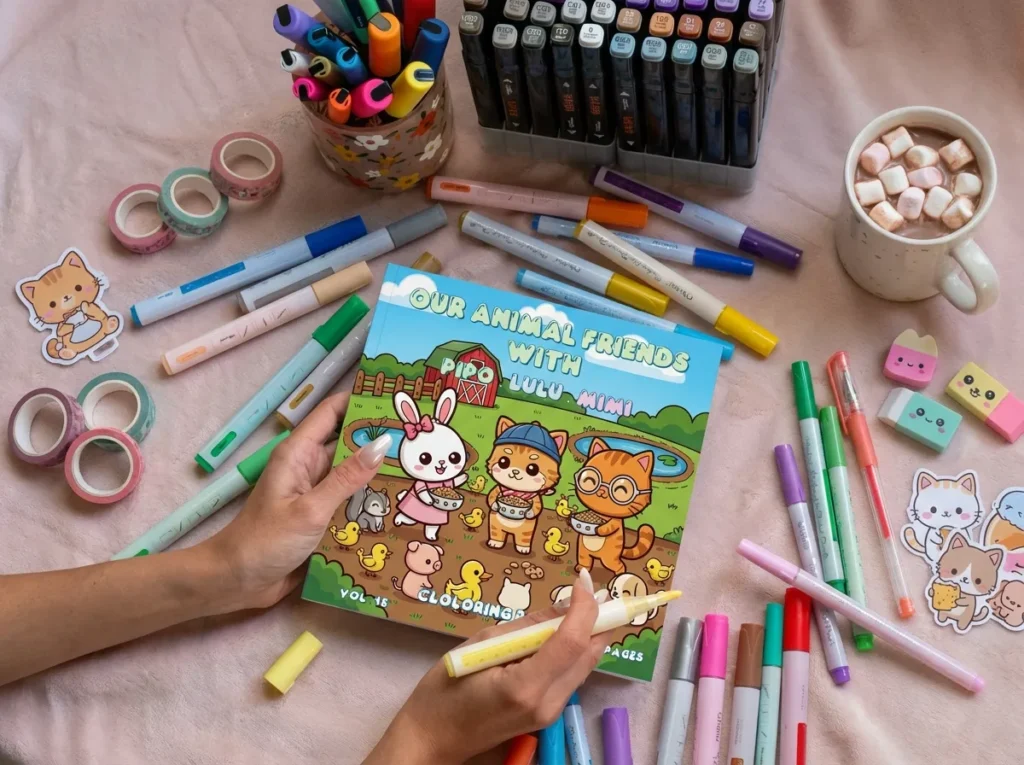
The tripod grip, which involves the thumb, index finger, and middle finger working together to stabilize a writing tool, does not develop through instruction alone. It develops through repeated use of tools in low-pressure contexts. Coloring provides exactly that. In the cozy friends coloring book, the character designs are intentionally rounded and enclosed, which encourages smaller, more controlled movements rather than the wide arm sweeps a child defaults to when given a blank page.
I think about coloring for toddlers specifically here. A two-year-old cannot hold a pencil correctly, but they can hold a thick crayon. Giving them enclosed shapes to fill rather than blank space trains the hand to work within limits, and that boundary-awareness is a precursor to letter formation. By age five, a child who has colored regularly already understands, physically, what it means to stay within a space. They carry that understanding into every writing lesson that follows. This is not coincidental. It is cause and effect, and it is why occupational therapists recommend structured coloring pages rather than free drawing in the earliest years.
When to introduce coloring and what to expect at each age
Age determines not just what a child can color, but how they interpret the act of coloring itself, and adjusting your expectations to match the developmental stage makes the entire experience more productive.
Knowing how to coloring at home effectively means understanding that a three-year-old and an eight-year-old are doing fundamentally different things when they pick up the same crayon. At three, the goal is contact and exploration. The child is learning that a tool makes a mark, and that the mark can be placed intentionally. Staying inside lines is not yet the point. At five, boundary awareness begins. The child wants to do it “right,” and mild frustration when they go outside the lines is a sign of growing self-monitoring, not failure. Between seven and ten, the child is capable of working independently for thirty minutes or more, selecting colors deliberately, and noticing when their work looks the way they intended.
For parents seeking the best coloring for kids ages 3 to 10, the practical implication is this: use different pages for different ages. Simple, large shapes for toddlers. Medium-complexity scenes for ages five to seven. Detailed illustrations with layered elements for children eight and older. A mismatch between page complexity and developmental stage is the most common reason a child loses interest after one session. Matching the page to the child’s current ability, not the age range printed on the cover, produces the engagement parents are looking for.
What makes one coloring book worth returning to and another worth forgetting, according to the cozy friends coloring book series
The single strongest predictor of whether a child returns to a coloring book is not the number of pages or the price, but whether the characters feel consistent enough to become familiar.
Familiarity creates investment. When a child recognizes a character from a previous page, they develop something close to ownership over that character’s world. They make decisions, choosing the same color for a fox’s fur across three different pages, maintaining continuity, and in doing so, practicing a form of sustained narrative thinking. This is why coloring activities for kids built around recurring characters outperform one-off illustration collections in terms of return usage.

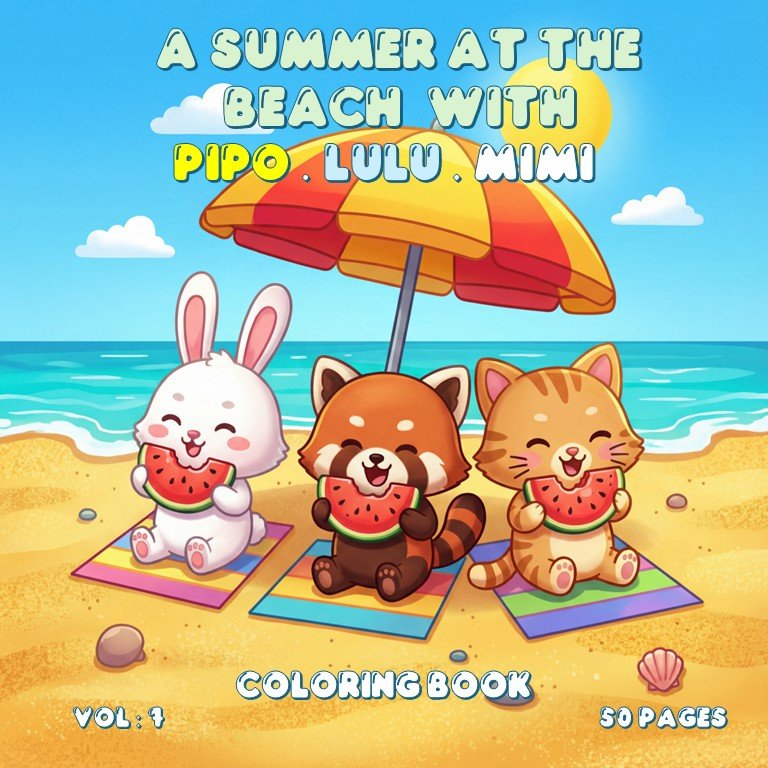
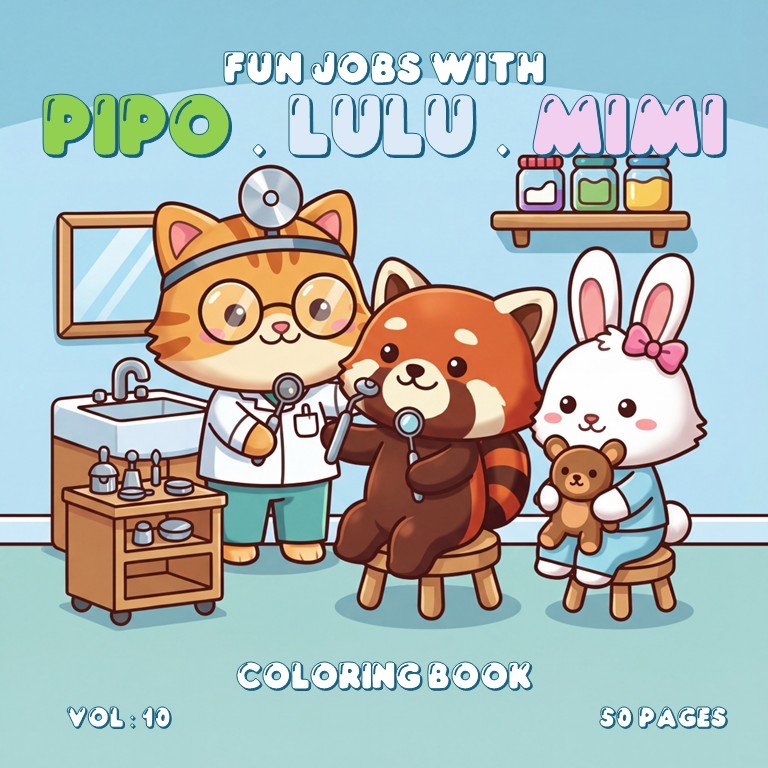
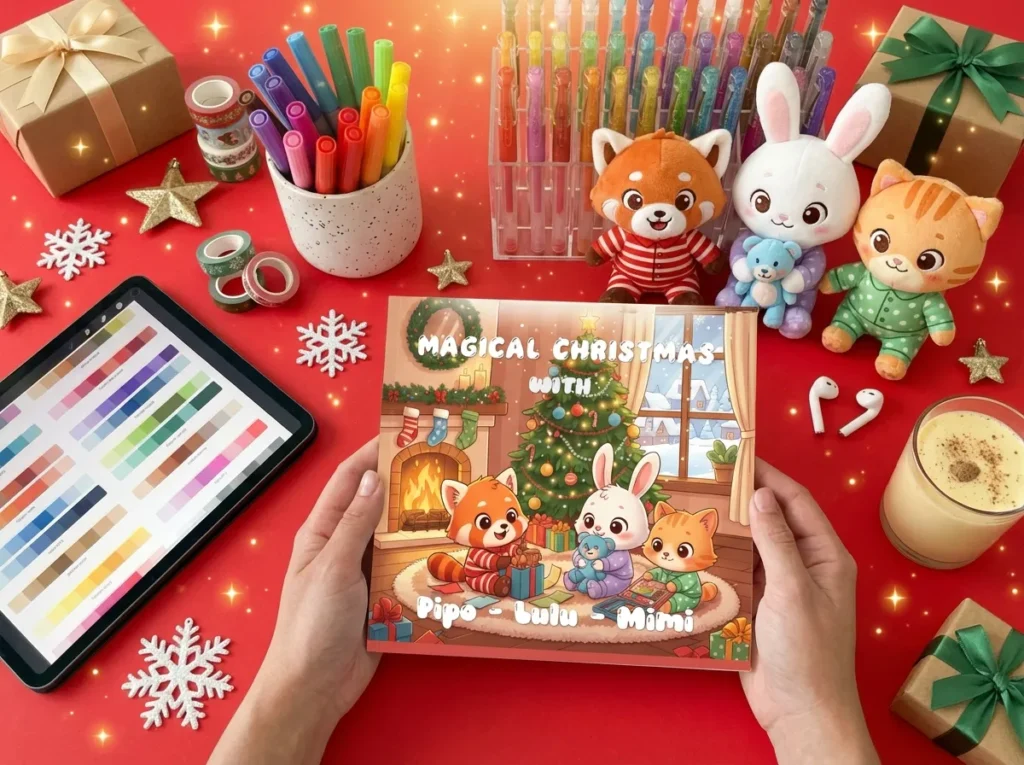
The cozy friends coloring page series is built around this principle. The characters appear across multiple pages in different scenes and settings, which gives children a reason to return. As a cozy friends coloring book guide to what makes these books work, I would point to three specific design decisions: enclosed shapes that reward controlled coloring, characters that appear in varied but recognizable contexts, and a range of page complexity that grows alongside the child. When those three elements are present, the book becomes a tool rather than a novelty. Novelties get used once. Tools get used until they wear out.
Frequently asked questions about The Real Benefits of Cozy Friends Coloring Book for Children Ages 3 to 10
Is coloring actually beneficial for children?
Yes, and the mechanism is specific. Coloring requires a child to coordinate visual input with fine motor output simultaneously. The eye tracks a boundary while the hand adjusts pressure and direction in real time. This dual-processing demand builds the neural connections that underlie handwriting, reading tracking, and sustained attention. The benefit is not general or vague. It is rooted in how the developing brain learns to coordinate perception and movement.
At what age should children start coloring?
Children can begin coloring as early as eighteen months with thick crayons and large, simple shapes. The goal at that age is not staying inside lines but building comfort with mark-making tools. Between ages three and four, children begin to show awareness of boundaries and will attempt to color within shapes. Structured coloring with enclosed designs becomes genuinely productive around age three, which is why most developmental recommendations align with that starting point.
How long should a coloring session last?
Session length should match the child’s current attention span, not an ideal. For toddlers, five to ten minutes is realistic and sufficient. For children ages five to seven, fifteen to twenty minutes produces the repetition needed to build motor habits. Children ages eight and older can comfortably work for thirty minutes or more. The key is ending the session before frustration sets in. A child who stops while still engaged will return willingly. A child who is pushed past their threshold will associate coloring with discomfort.
What coloring tools are best for young children?
For toddlers and preschoolers, thick triangular crayons are the most developmentally appropriate tool. The triangular shape naturally encourages a grip closer to the tripod position. For children ages five to seven, standard crayons and thick colored pencils both work well. By age eight, colored pencils with finer tips allow for the shading and detail work that older children are capable of and interested in. Washable markers are practical for home use but offer less pressure feedback than crayons, which matters for hand strength development.
Can adults benefit from coloring too?
Yes. The fine motor component is less significant for adults, but the attentional benefits remain relevant. Coloring requires sustained, directed focus on a low-stakes task, which gives the prefrontal cortex a structured but undemanding form of engagement. Many adults report that coloring helps them transition out of high-stimulation states, such as after screen-heavy work, and into calmer, more present ones. The mechanism is the same as it is for children: attention directed at a bounded, manageable task regulates arousal levels over time.
The evidence points in one direction. Coloring, done consistently and with age-appropriate materials, builds the hand strength, grip habits, and focused attention that children need before formal academic work begins. It is not a passive activity. It is practice with a clear developmental purpose. The earlier a child begins with well-designed pages, the more natural the transition to writing and detailed work becomes. For parents who want to give their child a genuine head start, the simplest move is also one of the most effective ones available.
Starting with the right pages matters. The printable PDF pages from the cozy friends coloring book series are available to download today, and each set is designed to match specific age ranges so the work is always appropriately challenging. Every week you wait is a week of practice your child does not get, and these early years move faster than any parent expects.
