

-
×
 Dinosaur Family Cozy Coloring Pages Vol. 1: Prehistoric Digital Fun 1 ×
$5.20$3.90
 Dinosaur Family Cozy Coloring Pages Vol. 1: Prehistoric Digital Fun


Blog
Can Family Coloring Reduce Stress and Anxiety in Both Children and Adults?
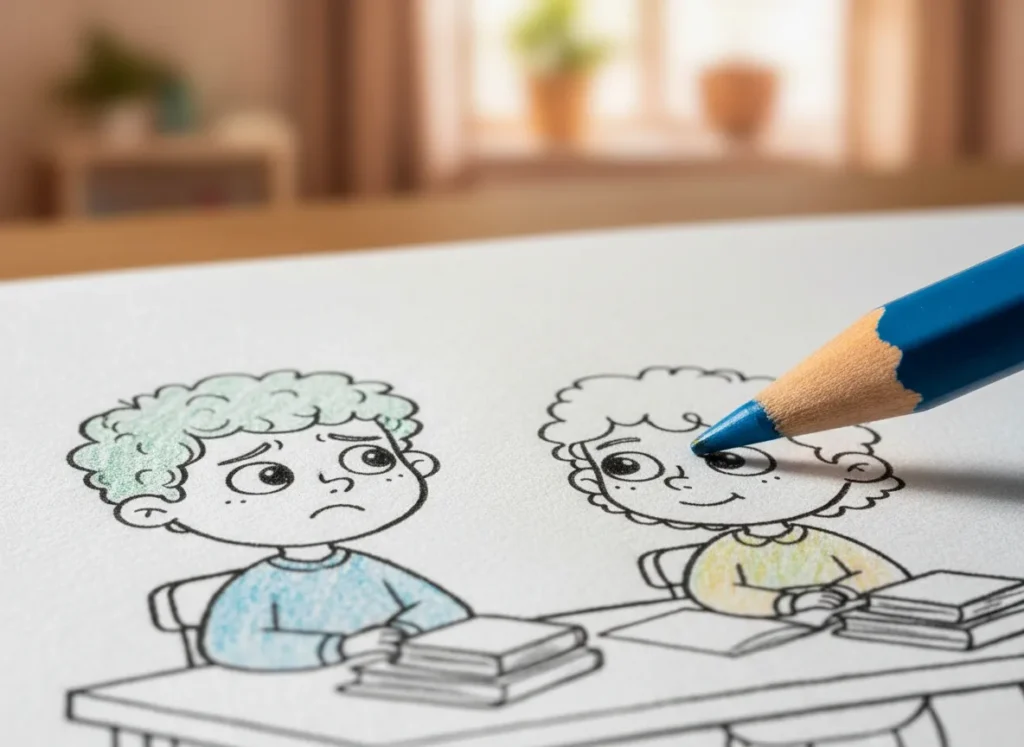
Coloring together as a family does more than fill a quiet afternoon. Research on repetitive, low-stakes activities consistently shows measurable reductions in cortisol levels, and coloring fits that profile precisely.
What coloring actually does for a child’s developing brain
Coloring is not simply a distraction, it is a structured neurological exercise that builds the very pathways children need to regulate emotion. When a child picks up a crayon and stays within a defined space, the brain coordinates visual input with fine motor output. That coordination requires sustained focus, which activates the prefrontal cortex, the region responsible for impulse control and emotional regulation. For children ages 3 to 7, this region is still forming, and repeated, gentle activation through activities like coloring literally strengthens it over time.
I have observed this in group settings with up to twenty children at once. When a single printed page is placed in front of each child, the room quiets within ninety seconds. That silence is not passive. Each child is processing color decisions, managing grip pressure, and tracking boundaries on the page. These are cognitive tasks running in parallel. The benefits of coloring together as a family for children extend well beyond keeping small hands busy. The activity targets attention span, bilateral coordination, and early decision-making, all at once, with nothing more than a printed page and a set of crayons.
For toddlers specifically, large simple shapes printed on standard letter-size paper are the most effective format. Fine detail overwhelms the developing grip and produces frustration rather than focus.
How a single coloring page can hold a child’s attention for forty minutes and ease anxiety in both kids
A well-designed coloring page creates a contained challenge, and contained challenges are precisely what reduces anxiety in both childrens by giving the nervous system a problem it can actually solve. When the scope of a task is visible and finite, the brain does not enter the scanning mode associated with open-ended worry. The child sees the page, sees the edges, and begins. That beginning is everything.
This is one of the most practical anxiety in both children tips for parents I can offer: the structure of the activity matters more than its duration. A page with four large zones holds a three-year-old for roughly ten minutes. A page with eight to twelve medium zones, appropriate for ages five to seven, regularly produces forty-minute sessions in classroom settings I have run with groups of fifteen or more children simultaneously.
The mechanism is completion feedback. Each filled zone registers as a small success, and the brain responds by releasing a modest amount of dopamine. That release sustains motivation to continue. The child is not simply coloring, they are collecting small wins in sequence. For beginners looking for coloring ideas, starting with pages that have three to five large zones removes the barrier of complexity entirely and makes the first session a reliable success rather than a source of frustration.
How to make coloring a consistent part of a child’s week
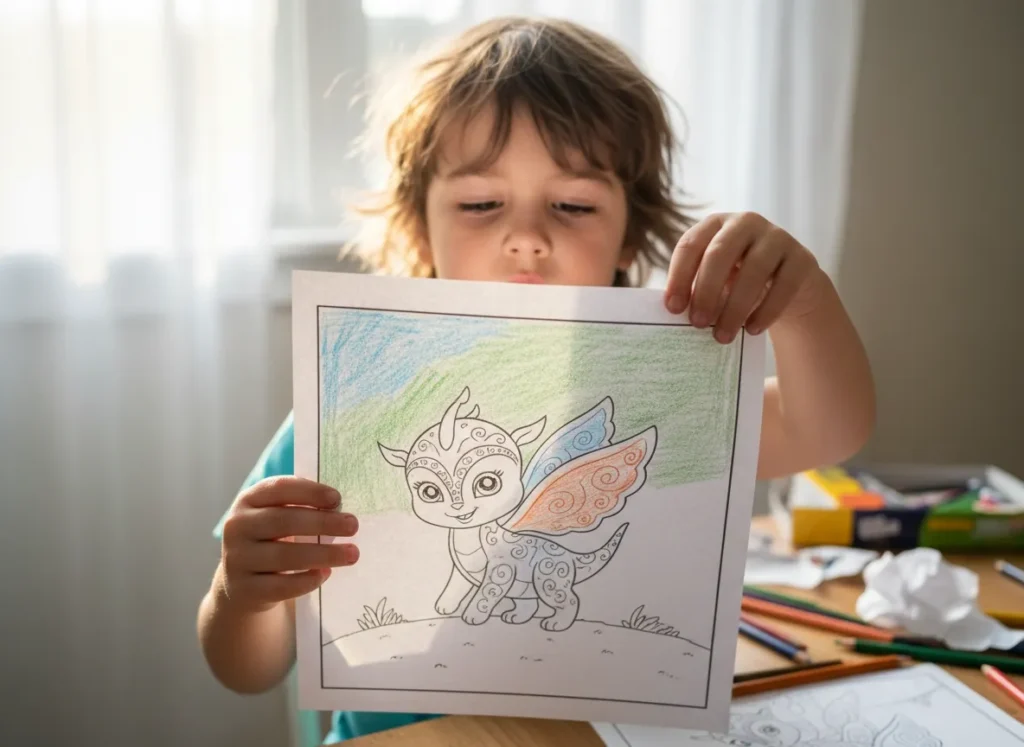
Consistency transforms a single calming activity into a reliable emotional tool, and the logistics of building that consistency are simpler than most parents expect. The materials required are minimal: a printed page, three to six crayons or washable markers, and a flat surface. No scissors, no glue, no adult supervision for the first ten to fifteen minutes once a child is comfortable with the format. That independence is significant for parents managing multiple children or a classroom of twenty.
I recommend scheduling coloring at the same time each day, ideally during a transition that children typically resist, such as the period after school or just before dinner. Predictable timing reduces negotiation and builds the association between the activity and a calm state. Over two to three weeks, children begin to self-regulate toward the activity rather than away from it.
This is the core of any practical anxiety in both children guide: repetition builds the neural association, and the neural association does the regulatory work automatically over time. For toddlers ages 3 to 4, two sessions per week is sufficient. For children ages 5 to 7, four sessions per week produces noticeable differences in classroom attention span within one month. Print the pages in advance, store them in a folder within the child’s reach, and let the child choose which page to color. That single element of choice increases engagement by removing resistance at the start of the session.
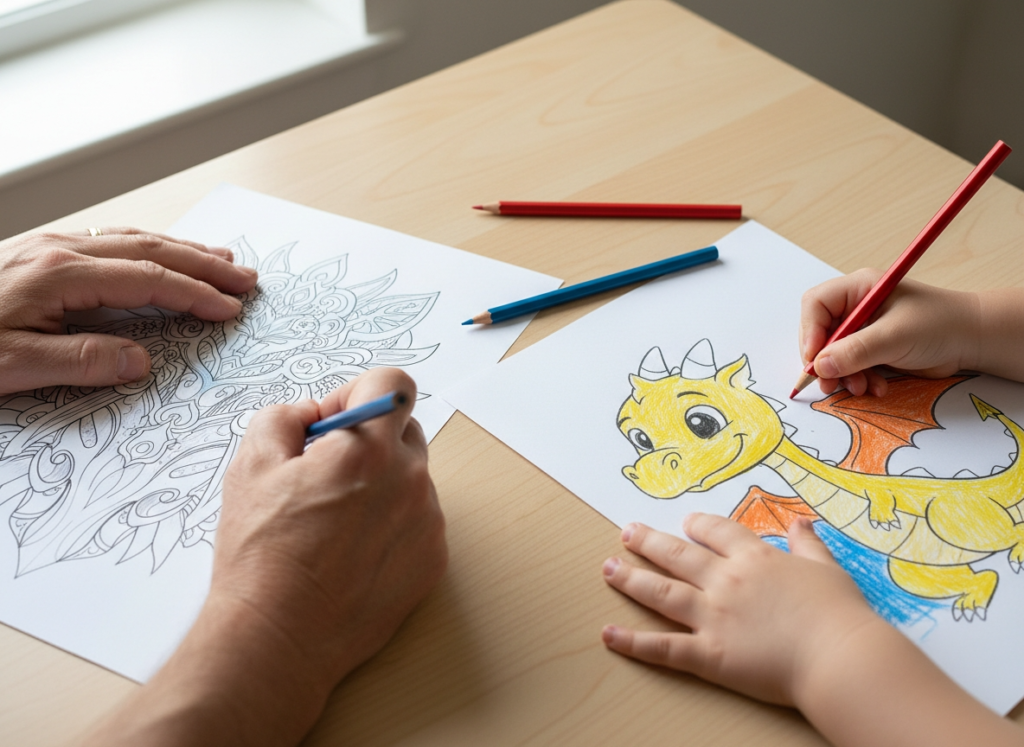
What adults get from coloring alongside their children and how it addresses anxiety in both children and adults
When an adult sits down and colors alongside a child, the dynamic of the activity shifts in ways that benefit everyone at the table. The child observes a calm, focused adult and mirrors that state. This is co-regulation, a process where a more regulated nervous system helps bring a less regulated one into balance. It is the reason a calm teacher produces a calmer classroom, and it is the reason adult participation in coloring sessions amplifies the results for children.
For the adult, the mechanism is slightly different. Repetitive manual tasks with a visible outcome reduce the brain’s default mode network activity, which is the neural system responsible for rumination and self-referential worry. Coloring interrupts that loop without requiring mental effort. The hand moves, the page fills, and the mind quiets. I notice this myself within six to eight minutes of starting a page.
Understanding how to reduce stress and anxiety at home through coloring means recognizing that the adult’s state is as relevant as the child’s. A parent who colors for fifteen minutes alongside a child is not simply supervising an activity. They are actively participating in a shared regulation experience. The page becomes a shared object of attention, and shared attention is one of the most reliable connectors between a parent and a young child. The coloring session becomes a practical, low-cost tool for managing anxiety in both kids and adults together, without requiring any special training or equipment.
Frequently asked questions about Can coloring together as a family help reduce stress and anxiety in both children and adults?
Is coloring actually beneficial for children?
Yes, and the benefit is structural rather than incidental. Coloring activates the prefrontal cortex, strengthens fine motor control, and provides repeated completion feedback that supports dopamine regulation. For children ages 3 to 7, these effects are particularly significant because the relevant neural systems are still developing. A daily or near-daily coloring practice produces measurable improvements in attention span and emotional regulation within four to six weeks.
At what age should children start coloring?
Children can begin coloring as early as 18 months with large crayons and oversized simple shapes. However, the neurological and emotional benefits described in this article become most accessible around age 3, when the child has enough fine motor control to engage with a defined zone on the page. Pages designed for toddlers should feature thick outlines and shapes no smaller than a child’s fist.
How long should a coloring session last?
Session length depends on the child’s age and the complexity of the page. For children ages 3 to 4, ten to fifteen minutes is a realistic and productive session. For children ages 5 to 7, sessions of twenty to forty minutes are achievable with the right page design. There is no benefit to extending a session beyond the child’s natural engagement window. Ending while the child is still interested preserves positive association with the activity.
What coloring tools are best for young children?
Triangular crayons are the most effective tool for children ages 3 to 5 because the shape naturally guides correct grip without adult correction. Washable broad-tip markers work well for ages 4 and up and produce vivid results with minimal pressure, which reduces hand fatigue. Avoid fine-tip markers and standard colored pencils for children under 5, as both require grip strength and pressure control that most children in that range have not yet developed.
Can adults benefit from coloring too?
Adults benefit through a different but complementary mechanism. The repetitive, low-stakes nature of coloring reduces default mode network activity, the neural system associated with rumination and background worry. Adults who color alongside children report lower perceived stress within a single session. The activity requires no prior skill, no preparation, and no screen time, making it one of the most accessible self-regulation tools available at home.
Coloring together is not a luxury activity reserved for art classes or rainy afternoons. It is a practical, repeatable tool that addresses anxiety in both children and adults through documented neurological mechanisms. The materials are inexpensive, the setup takes under two minutes, and the benefits accumulate with each session. A family that colors together consistently builds shared calm as a baseline, not as an exception.
If you do not have a set of ready-to-print pages in your home or classroom right now, the next difficult afternoon will pass without this resource available to you. Our printable PDF coloring book series is designed specifically for children ages 3 to 7, with pages scaled by complexity for each age group, and you can download and print the first set today. Each week you wait is a week of sessions that do not happen.
