

-
×
 Dinosaur Family Cozy Coloring Pages Vol. 1: Prehistoric Digital Fun 1 ×
$5.20$3.90
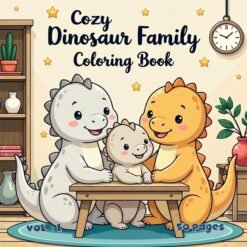 Dinosaur Family Cozy Coloring Pages Vol. 1: Prehistoric Digital Fun
Blog
How to Choose the Best Coloring Tools for Family Use at Home
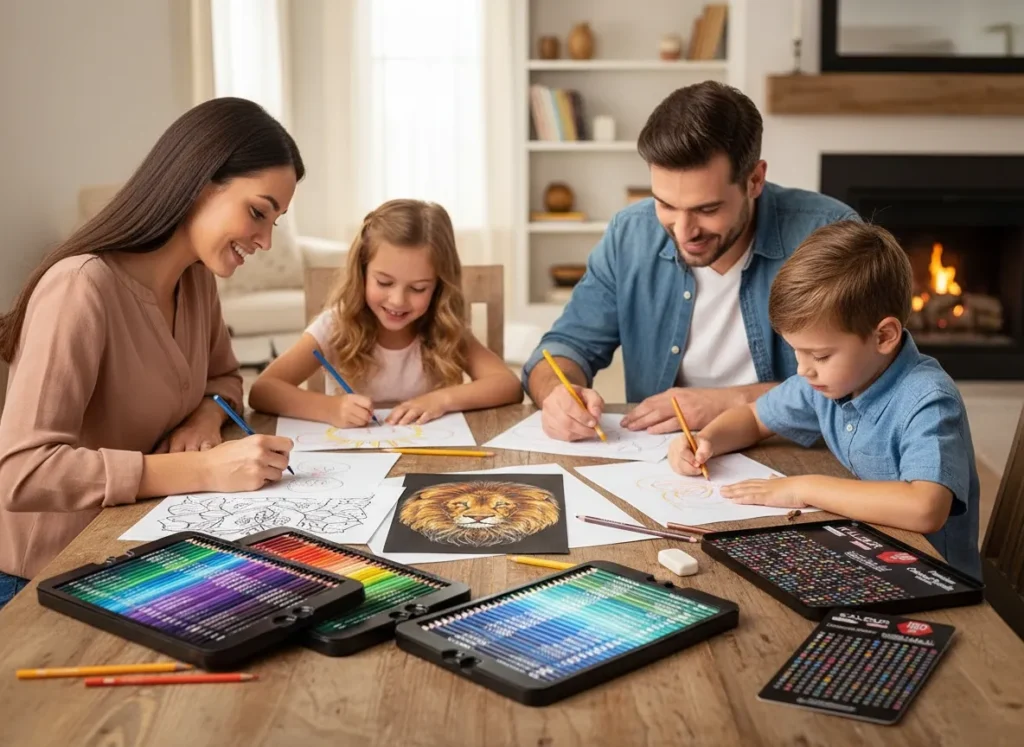
Compare colored pencils, markers, and watercolors as family coloring tools, with guidance on paper, age matching, and skill development for children ages 8 to 12.
Colored pencils are the best general-purpose coloring tool for family use, with markers a close second for younger children and watercolors a viable option once basic control is established. The problem most parents encounter is not knowing why one tool outperforms another for a specific child at a specific skill level, which leads to purchasing decisions that produce frustration rather than finished pages. This guide explains the mechanism behind each tool’s behavior, how to match tools to the pages being printed, and how to adapt the setup for children across multiple ages working from the same PDF collection at the same table.
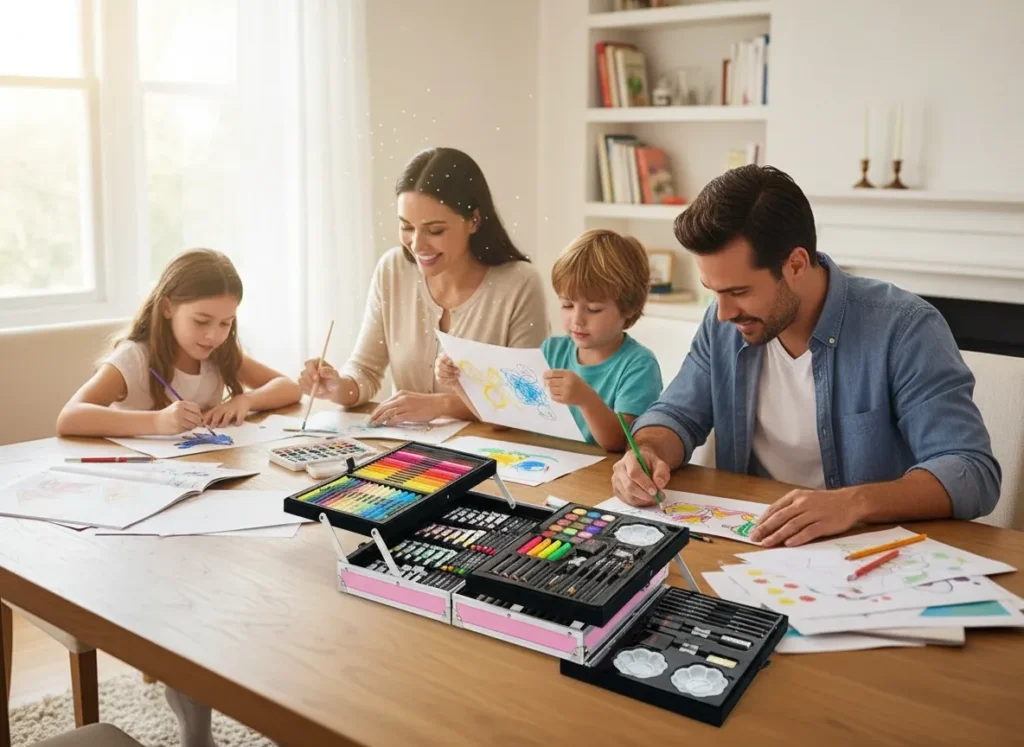
Before the first session begins, three categories of materials need to be in place: printed pages on paper between 90gsm and 120gsm, a tool set matched to the age range of the children participating, and a flat well-lit surface large enough for each child to work without overlapping. For a group of four to six children aged eight to twelve, one set of twelve to twenty-four colored pencils per child, or one set of broad-tipped washable markers per child under eight, covers the full range of pages in a standard PDF coloring series.
What you need before you start
The tool a child uses determines not just the visual result but the physical experience of the session, and a poor tool match is the most common cause of a session that ends before the page is finished. Understanding why each tool behaves the way it does makes the selection process straightforward rather than arbitrary.
Colored pencils work by depositing wax or oil-based pigment through direct pressure. The child controls color intensity by varying how hard they press, which means the tool rewards experimentation and allows correction. A light layer of one color can be built over with a second, producing blends that a marker cannot replicate. For children aged eight to twelve who are working on detailed illustrations with interior linework, this layering capability is significant. It allows the child to make early decisions without committing to them permanently, which keeps the page recoverable and the child engaged.
Markers work differently. A marker deposits ink through capillary action, and the ink saturates the paper fiber on contact. The result is bold and immediate, which is why markers produce faster visible progress than colored pencils. That speed is an advantage for younger children or children who need early positive reinforcement to stay at the table. It becomes a disadvantage for detailed work because the ink cannot be lightened or blended once it is on the page. A child who makes an early color decision they want to change has no recovery option with a marker.
Watercolors introduce a third variable: water quantity. Too much water produces bleeding beyond the intended boundary. Too little produces streaky coverage. For children under ten, this variable is difficult to manage consistently, which is why watercolors work best as a supplementary colouring tools option rather than the primary one. A colouring tools guide for family use should position watercolors as a progression tool, not a starting point.
How to go from PDF to printed page in under three minutes using the right coloring tools
The paper a page is printed on is not a neutral variable; it is an active determinant of how every tool performs, and selecting the wrong weight creates problems that no amount of skill can fully compensate for. This is the step most guides skip entirely, which is why so many family coloring sessions produce disappointing results despite good tools and good intentions.
Standard 80gsm printer paper is too thin for any layered application. Colored pencils applied with moderate pressure will dimple the surface. Markers will bleed through to the page or table beneath. Watercolors will cause the paper to buckle and warp almost immediately. The underlying cause in all three cases is the same: 80gsm paper has insufficient fiber density to absorb pigment, ink, or water without structural failure. The fix is simple and inexpensive. Selecting 90gsm to 120gsm paper from any office supply source resolves all three problems simultaneously.
For a group session with children of mixed ages, printing multiple copies of each page is worth doing before the session begins rather than during it. A child who finishes early and wants to try a page again, or who makes an early error they want to recover from, can receive a fresh copy without interrupting the session for anyone else. This logistical detail is one of the most practical coloring tools tips for parents running multi-child sessions, because it eliminates the single most common point of friction in a group coloring environment.
The PDF format itself contributes to this flexibility in a way that a physical book cannot. Every page in the collection is printable on demand, in any quantity, at the paper weight that best suits the tools being used that day. A session using watercolors calls for heavier paper than a session using colored pencils. The format accommodates that decision without any additional cost beyond paper and ink.
How to get the most out of each page
A coloring page is not a uniform surface; it has architecture, and understanding that architecture determines whether a child works through it efficiently or stalls partway through. The sequence in which a child addresses a page has a measurable effect on the finished result.
The sequence that produces the most consistent outcomes across age groups and tool types is: outline first, largest interior areas second, smallest details last. The reason this works is cognitive load management. Beginning with the outline gives the child a complete visual map of the space before any color decisions are made. This reduces the number of choices the brain must hold in working memory simultaneously, which preserves cognitive resources for the color decisions that follow.
The benefits of which coloring tools are best for family use for children working through a structured sequence extend beyond the finished page. Children who practice a consistent approach to page completion develop the habit of planning before acting, a transferable skill that appears in writing, drawing, and problem-solving contexts. The which coloring tools are best for family use ideas for beginners that produce the fastest visible improvement are always sequence-based rather than tool-based, because the sequence is the part most beginners are never taught explicitly.
For children aged eight to twelve working on detailed pages, the interior linework presents a specific challenge. Small enclosed spaces are difficult to fill evenly because the hand cannot easily access the center of a tight area without rotating the page. Teaching a child to rotate the page rather than contort the hand is a simple intervention that immediately improves coverage quality. Watch for children who bear down harder in small spaces, heavy pressure in tight areas is almost always compensation for an awkward hand angle rather than an expression of care.
How to adapt the process for different ages and coloring tools
The same PDF page can function as a beginner activity or an intermediate challenge depending entirely on which colouring tools are assigned and which portion of the page the child is directed to complete first. Age adaptation does not require separate pages or separate sessions. It requires deliberate tool and sequence assignments.
For children aged eight to ten who are building confidence with detailed work, colored pencils at a light initial pressure are the appropriate starting point. Directing this age group to outline the main subject first, then fill the largest interior areas with a single base color before adding detail layers, produces a finished page that feels achieved rather than rushed. The layering process also introduces basic color theory in context: a yellow base under orange produces a warmer tone than orange alone, and the child discovers this through direct experience rather than instruction.
For children aged ten to twelve who already have solid pencil control, which coloring tools are best for family use activities for kids at this level should introduce blending and shading as explicit techniques. A simple shading exercise, pressing harder on one edge of a filled area to create a gradient toward the center, builds directional pressure control that transfers directly to drawing and illustration work. This is the age range where the distinction between coloring as a fine motor exercise and coloring as a visual art practice begins to matter, and the pages a child works on should reflect that transition.
The how to which coloring tools are best for family use at home question for multi-age groups resolves practically: assign colored pencils to children aged eight and above, broad-tipped washable markers to children under eight, and use the same printed pages for both groups where page complexity permits. Where it does not, print simpler pages from the same thematic series for younger children so the visual world of the session remains shared even when the individual pages differ.
Common mistakes in tool selection and session setup cluster around four errors. The first is using 80gsm paper with any tool other than a dry crayon, which produces bleeding, dimpling, or warping depending on the tool. The second is introducing watercolors to children who have not yet established consistent boundary control with pencils or markers, because the added variable of water quantity overwhelms the fine motor system before it is ready. The third is purchasing marker sets without checking for washability, a single uncapped marker on fabric or furniture ends a session in the worst possible way. The fourth is running sessions without printed spare copies available, which creates unnecessary friction every time a child wants to start a page again.
Questions about Which coloring tools are best for family use — colored pencils, markers, or watercolors?
Why do colored pencils produce better results than markers on detailed pages?
Colored pencils allow the child to control color intensity through pressure variation, which means early color decisions are not permanent. A light initial layer can be built over, blended, or left as a base for a second color. Markers deposit ink through saturation, which commits the surface immediately and leaves no room for correction. On detailed pages with small enclosed spaces and fine interior linework, the ability to correct and layer is the primary determinant of a satisfying finished result. This is why colored pencils consistently outperform markers for children working on complex illustrations, regardless of age.
At what age is it appropriate to introduce watercolors into a family coloring session?
Watercolors become a viable tool once a child has demonstrated consistent boundary adherence with colored pencils or markers across multiple sessions. For most children, this occurs between ages eight and ten, though the relevant indicator is skill level rather than age specifically. The reason watercolors require this prerequisite is that managing water quantity adds a second variable to the coloring task simultaneously with the color decision itself. A child who is still developing boundary control does not have the cognitive bandwidth to manage both variables at once, and the result is typically a page that feels out of control rather than creative. Introducing watercolors as a supplementary tool on broad-area pages, before using them on detailed work, bridges the transition effectively.
How much paper should be prepared before a group session with six children?
For a group of six children in a session lasting twenty to thirty minutes, printing two copies of each selected page per child is a practical minimum. This accounts for one page completed during the session and one spare in case of an error or a desire to attempt the page again with different colors. For watercolor sessions specifically, printing three copies per child is worth considering because watercolor errors are more difficult to work around than pencil or marker errors. Having copies ready before the session begins eliminates interruptions and keeps all children working simultaneously, which is the logistical condition that produces the most productive group sessions.
Does the brand of colored pencil affect the outcome for children in this age range?
Brand affects outcome primarily through two variables: pigment concentration and core hardness. Higher pigment concentration produces richer color with less pressure, which reduces hand fatigue during longer sessions. A harder core holds a point longer but requires more pressure to produce visible color, which can be counterproductive for children still developing grip control. For children aged eight to twelve, a mid-range set with a slightly softer core produces better results than either a very cheap set with low pigment density or a professional set with a hard core designed for adult precision work. The specific brand matters less than these two characteristics.
Can the same set of pages work for both a coloring session and a drawing activity?
Printed coloring pages function effectively as drawing references when a child traces the outline lightly onto a blank sheet before coloring the original, which produces a practice copy that can be used for experimental color combinations without risking the printed page. For children aged ten to twelve who are developing drawing skills alongside coloring practice, this approach extends the utility of a single printed page into two distinct activities within the same session. It also reinforces observational drawing skills because the child must look carefully at the original illustration while tracing, which builds the visual analysis habits that underpin more advanced drawing work.
Colored pencils on 90gsm to 120gsm paper remain the most reliable coloring tools combination for family use across the eight to twelve age range. Markers serve a clear purpose for younger children or for sessions where bold, fast results are the priority. Watercolors belong at the intermediate level, introduced after boundary control is established, not before. The tool is not the limiting factor in most family coloring sessions. The paper weight and the page complexity match are.
Every session run on the wrong paper or with the wrong tool for the child’s current skill level is a session working against development rather than with it. The Cozy Family Coloring Book PDF series is designed to be printed at the paper weight that matches the tools in use, with pages sequenced for exactly the skill progression this guide describes, and the collection is available to download now. Waiting means the next session starts without the structural foundation that makes the difference between a page that gets finished and one that gets abandoned.
