

-
×
 Dinosaur Family Cozy Coloring Pages Vol. 1: Prehistoric Digital Fun 1 ×
$5.20$3.90
 Dinosaur Family Cozy Coloring Pages Vol. 1: Prehistoric Digital Fun


Blog
How to Organize a Fun and Relaxing Family Coloring Session at Home
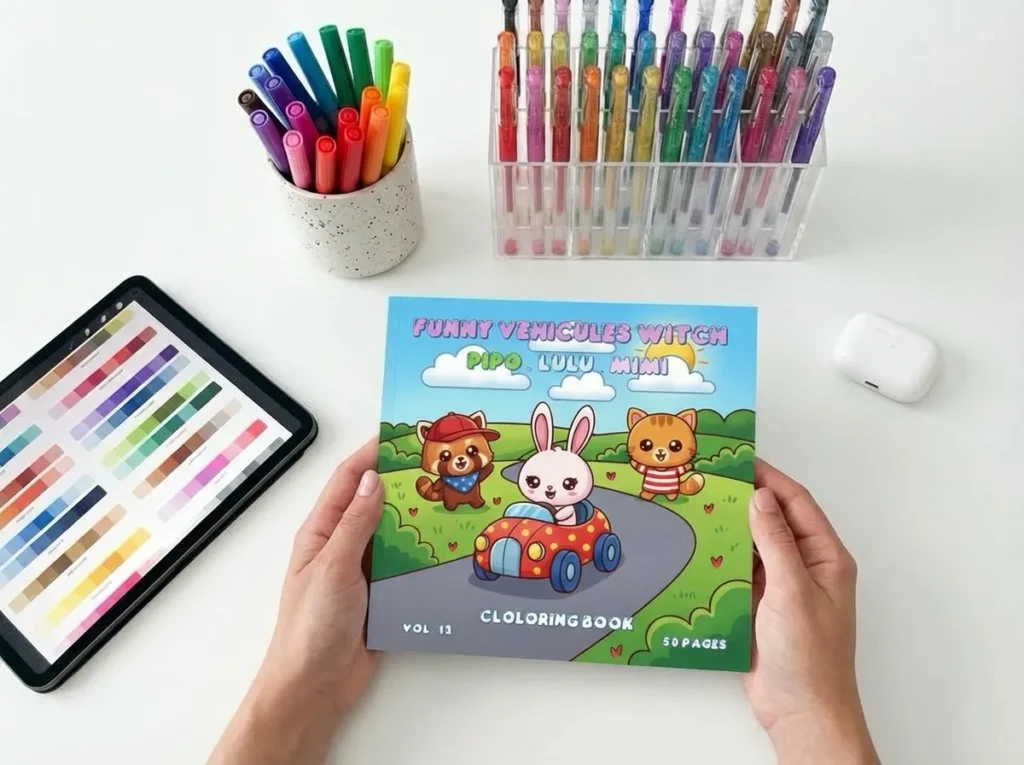
Plan a relaxing family colouring session at home with this complete guide covering tools, techniques, developmental benefits, and printable PDF tips for all ages.
There is a question I hear from homeschooling parents more than almost any other: is relaxing family coloring actually doing something useful, or is it just a quiet way to fill an afternoon? I understand the skepticism. When you are building a structured learning day, every activity needs to earn its place. What I have found, after a lot of time observing family coloring sessions and reading the developmental research behind them, is that the answer depends almost entirely on how the session is set up, what materials are used, and whether the adult in the room is genuinely participating or simply watching. This guide covers all of it. We will look at what family coloring actually is and is not, how it works on a developmental level, which tools and formats make implementation easier, and how to answer the practical questions that come up once you start.
Table of Contents
The complete guide to understanding relaxing family colouring The mechanics behind relaxing family colouring explained clearly What parents and educators do differently when they understand how to organize a fun and relaxing family session at home The nuances most guides on relaxing family colouring miss
The complete guide to understanding relaxing family coloring
Is a family coloring session simply a quiet activity that keeps children occupied, or is it something with measurable developmental value? Honestly, it can be either, and the difference comes down entirely to how it is approached. A session where a child receives a random page, a box of crayons, and no adult engagement is functionally babysitting. A session where the page is chosen with intention, the tools match the child’s current skill level, and a parent works alongside them is something meaningfully different.
Relaxing family coloring, in the way I use the term throughout this guide, refers specifically to structured, shared coloring time where at least one adult participates as a co-creator rather than a supervisor. That distinction matters because children at every developmental stage take strong cues from adult behavior. When a parent picks up a pencil and genuinely engages with their own page, the child’s relationship with the activity shifts immediately. It becomes something adults consider worth doing, which raises its perceived value in the child’s mind without a single word of encouragement.
What it is not: it is not a replacement for structured academic instruction, and positioning it that way sets it up to fail. It is also not a passive reward activity with no learning component. The framing I have found most useful, particularly for homeschooling families, is to treat a coloring session as a fine motor and visual planning exercise with genuine emotional benefits layered on top. That framing allows you to justify the time within a learning day without overstating what coloring alone can do.
The benefits of how can parents organize a fun and relaxing family coloring session at home? for children are real and specific. They include improvements in hand grip and pencil control, the gradual development of color theory intuition, and the practiced ability to sustain focus on a single task for a meaningful stretch of time. These skills transfer directly to writing, drawing, and independent work habits across grade levels.
Why session structure determines outcome
Structure matters more than materials, and I say that as someone who has spent a fair amount of time thinking about both. A thirty-minute session with a clear start point, a table prepared in advance, and pages already selected produces more focused engagement than an open-ended session where the child has to locate everything themselves. I treat setup as part of the activity. That single shift changes how sessions begin, and how they end.
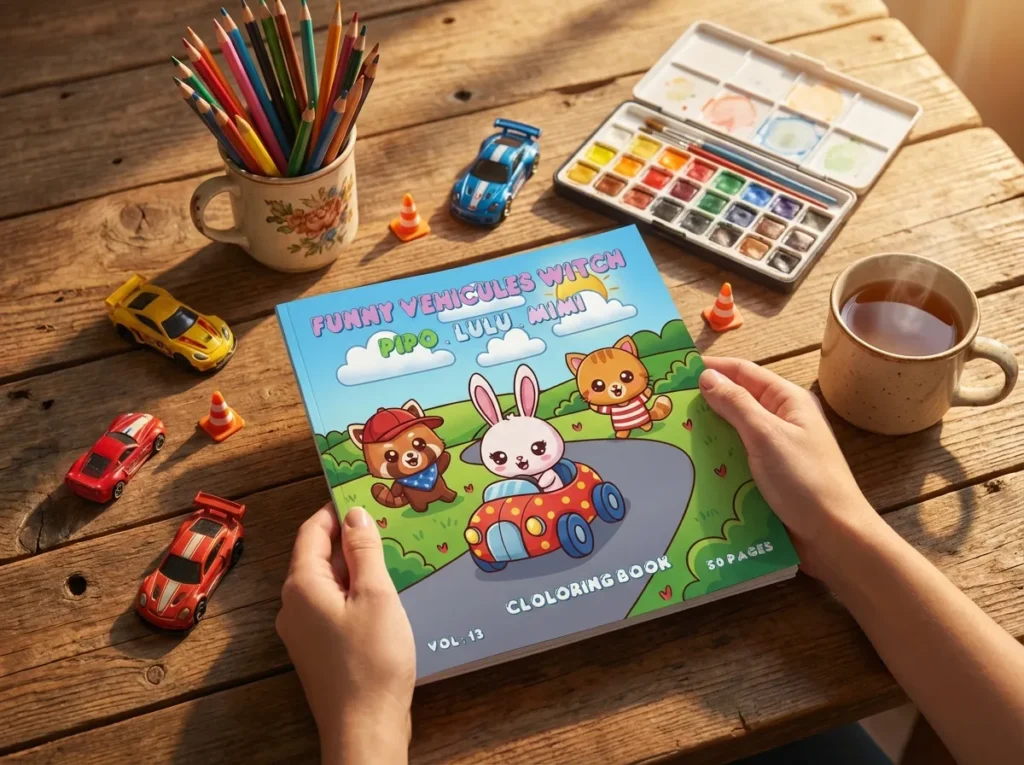
The mechanics behind relaxing family coloring explained clearly
How does sitting at a table with colored pencils actually change anything in a child’s development? The mechanism is more specific than most parents expect, and understanding it helps you design better sessions rather than hoping the activity produces results on its own.
When a child colors within defined lines, the brain is coordinating two systems simultaneously: the visual cortex, tracking the boundary and pencil direction, and the motor cortex, adjusting grip pressure and movement speed in real time. That coordination requires active concentration, and each session of practice strengthens the neural pathways that support it. For children in a homeschool environment who spend significant time on handwriting, journaling, or drawing, regular coloring work directly reinforces those same pathways.
The relaxing family coloring tips for parents that produce the most consistent results are almost always structural rather than motivational. Choosing a page at the right complexity level, making sure the lighting is adequate, and ending the session before fatigue sets in are more effective than any encouragement strategy. Children do not need to be told to enjoy coloring. They need the conditions that make it possible.
How line weight affects the coloring experience
This is something experienced colorists know intuitively but rarely name. Thick outlines are forgiving. They let a child work quickly without constant precision, which builds confidence and momentum early in the session. Fine interior lines require a slower, more deliberate approach and reward a child who already has solid pencil control. A well-designed family coloring page contains both: broad outer boundaries for fast initial progress and finer interior detail that invites closer attention.
For adults working alongside children, fine-line illustrations offer a genuinely satisfying level of challenge. The how can parents organize a fun and relaxing family coloring session at home? for adults dimension is often underexplored in coloring discussions, but adults benefit from a complex page in ways that are distinct from children’s benefits. For adults, the primary gain is restored single-task focus in a context that rarely demands it, and that effect is real.
The role of paper quality in session satisfaction
Paper weight affects outcome in ways that are easy to overlook until they become a problem. Thin paper lets colored pencil pigment transfer to the page underneath, which frustrates any child working carefully. Heavier paper, typically above 90gsm, accepts layered pencil work without bleeding or tearing. When you print from a PDF coloring book, paper selection is entirely within your control, which is one of the underrated advantages of the printable format over a physical book.
What parents and educators do differently when they understand How can parents organize a fun and relaxing family coloring session at home?
What separates a coloring session that a child returns to voluntarily from one that gets abandoned after ten minutes? In my experience, it almost always comes down to one thing: the adult in the room has a clear understanding of what they are trying to accomplish, and that clarity shapes every decision they make before, during, and after the session.
Parents and educators who approach a relaxing family coloring guide with genuine intentionality make different material choices. They select a curated PDF series over a random collection of printables because cohesion matters. A thematic series means every page feels connected to the ones before and after it, which builds ongoing investment in the collection. Children attached to a theme return to the activity voluntarily, without prompting.
They also make different structural choices. How can parents organize a fun and relaxing family coloring session at home? ideas for beginners always start with a single, well-chosen PDF series rather than an overwhelming variety of sources. Cohesion matters more than diversity at the beginning. A beginner, whether child or parent, needs a clear starting point and a sense of continuity across sessions.
Integrating coloring into a homeschool learning day
I use coloring sessions as transition activities or focused independent work periods, not as free time. Placed between a writing lesson and a reading block, a twenty-five-minute coloring session lets the brain shift modes without the disengagement that screen-based breaks tend to produce. The fine motor activity maintains a productive physical state while reducing the mental load of purely academic work. It is one of the quieter transitions in a learning day, and often the most effective one.
Choosing activities that scale across grade levels
The most common challenge in a homeschool household is keeping a seven-year-old and an eleven-year-old both genuinely engaged at the same table. The solution is page differentiation within a shared session. How can parents organize a fun and relaxing family coloring session at home? activities for kids across multiple grade levels works best when the coloring book contains a visible range of complexity. The younger child works on a broader, simpler page while the older child works on a more detailed illustration from the same thematic collection. Both children remain inside the same visual world, which creates a sense of shared activity even when the pages differ significantly.
The nuances most guides on relaxing family coloring miss
What do most coloring guides get wrong about running a successful family session? They focus almost entirely on material recommendations and ignore the subtler variables that actually determine whether a session holds attention or falls apart. Paper weight, line density, illustration cohesion across a collection, and the adult’s role in the room are the variables that matter most, and they are consistently underexplained.
One nuance I rarely see discussed is the relationship between page selection and session length. A page that is too simple relative to a child’s skill level does not produce a longer session. It produces a shorter one, because the brain disengages once it stops being challenged. The same is true in the opposite direction. A page that is too complex generates early frustration and a retreat from the table. Matching page complexity to current skill level is the single most effective relaxing family coloring tips for parents I can offer, because it addresses the root cause of most abandoned sessions.
Another nuance is the value of repeatability in a printable format. A physical coloring book is a single-use object per page. Once a child colors a page they love, it is gone. A PDF series removes that constraint entirely. I can print the same page multiple times in the same week if a child wants to experiment with a different color approach, and the cost per session drops to paper and ink. For homeschooling families running regular sessions, that flexibility compounds quickly.
Why illustration style matters more than theme
Theme draws a child to a page. Illustration style determines whether they finish it. A cozy indoor scene with well-balanced line weight, clear focal points, and enough internal detail to reward close attention will hold a child’s focus far longer than a technically themed page with poor line distribution. When I evaluate a PDF series for family use, I look at illustration architecture before I look at subject matter. The how can parents organize a fun and relaxing family coloring session at home? for adults experience depends on this even more than the child’s does, because adults notice composition quality immediately and disengage from pages that feel flat or visually unresolved.
How long should a family coloring session last for the best results?
For children aged eight to twelve, twenty to forty minutes is the range where genuine engagement holds. Past that point, fatigue starts to affect decisions and the child may begin rushing or losing interest in the detail work. For younger children, fifteen to twenty minutes is more realistic. The key is ending the session while the child is still engaged rather than waiting until they drift away. Sessions that end well are significantly easier to restart the next day, and that consistency is what produces real improvement in focus and fine motor skill over time.
Does the adult need to color too, or is supervising enough?
Participation and supervision produce fundamentally different sessions. When an adult colors alongside a child, the child observes someone choosing focused, creative work over a screen, which validates the activity in a way that no amount of verbal encouragement can replicate. It also transforms the session into a shared experience rather than a directed one, which opens natural conversation with no agenda attached to it. I strongly recommend that the adult participates with their own page whenever possible. It genuinely changes the tone of the room, and the child notices.
What is the best way to choose pages for different skill levels?
Start with line weight and interior detail. A page with thick outlines and large open areas suits a child still developing pencil control. A page with fine internal linework, small enclosed spaces, and layered patterns suits a child who already colors within lines consistently. For adults, illustrations with genuine complexity, including cross-hatching, geometric patterning, or organic texture detail, provide a satisfying level of challenge. The best PDF series for families include all of these levels within a single thematic collection, so you are not managing separate resources for each child.
Can coloring replace other fine motor activities in a homeschool day?
It should complement rather than replace them. Handwriting practice, cutting, and building activities each develop slightly different aspects of fine motor skill. Coloring specifically builds grip endurance, pressure control, and visual tracking. These are transferable skills, but they do not cover the full range a child needs across a learning day. I treat coloring as one component of a broader fine motor routine rather than a standalone solution, and that framing keeps it from being asked to do more than it can deliver.
What paper weight should I use when printing PDF coloring pages?
Anything from 90gsm to 120gsm works well for colored pencil work. Standard 80gsm printer paper is too thin for layered pencil application and tends to dimple or tear under firm pressure. If you are using markers alongside pencils, 120gsm is worth the slightly higher cost because it prevents bleed-through to the page beneath. I keep both weights on hand and select based on what the child will be using in that specific session, which takes about ten seconds of advance thought and prevents a surprising amount of frustration.
How do I keep children motivated to return to coloring sessions regularly?
Motivation follows completion. Children who finish pages and see the finished work displayed or collected somewhere visible are significantly more likely to return to the activity than children whose pages disappear into a folder. Designating a visible space, whether a wall section, a binder, or a dedicated shelf, where completed pages accumulate works well in practice. The growing collection becomes its own motivation because it gives the child visible evidence of sustained effort over time, which is genuinely useful for a child who struggles to recognize their own progress.
Are there coloring books that work equally well for toddlers and older children?
A single physical book rarely spans that range effectively, and I have not found one I would recommend for both without reservation. What works better is a PDF series with multiple complexity levels, where you print different pages from the same thematic collection depending on the child. A toddler can work on broad shapes and minimal detail while a ten-year-old works on a more complex page from the same visual world. The shared theme maintains a sense of collective activity even when the actual pages differ substantially.
A well-organized relaxing family coloring session is not a passive activity. It is structured, shared time that builds fine motor skill, sustained focus, and creative decision-making across all participating ages. The outcomes depend on session structure, material quality, page complexity matching, and adult participation. Printable PDF series are the most practical format for homeschooling families because they allow for page repetition, complexity selection, and consistent thematic engagement without the limits of a physical book.
Family coloring works when it is treated as a real activity rather than a gap-filler. The families I have seen benefit most from it are the ones who prepare their sessions with the same care they bring to other parts of the learning day. That means choosing materials deliberately, selecting pages that match each child’s current skill level, and sitting down at the table alongside them. None of that requires significant time or expense. It requires a clear understanding of why the activity works, which is what this guide has tried to give you.
Every session you run without the right pages is a session that depends on luck rather than design. The Cozy Family Coloring Book PDF series contains pages built for exactly this kind of structured, multi-age household use, and the collection is available to download now. Waiting means the next session starts without the foundation this guide describes.
